Baby Toys Guide: The Right Toys for Your Baby from Newborn to 12 Months
14 Oct 2026
Baby Toys Guide: Newborn to 12 Months
In the first year, your baby changes almost every month. A newborn can barely focus on a face, but by twelve months many babies are crawling, standing and pressing buttons to hear their favourite song. The right baby toys change along the way too.
You do not need a room full of toys. A few well-chosen, safe toys for each stage are enough. In this guide, we look at which baby toys suit each age, what to avoid and simple ways to play with your baby.
Before You Buy: Baby Toy Safety
Babies explore with their mouths, so safety comes first at every stage.
- No small parts. Anything that can fit in your baby's mouth is a choking risk.
- No button batteries or loose magnets. Both are very dangerous if swallowed.
- No long strings or cords. They can wrap around a baby's neck.
- Smooth edges and sturdy build. Toys should not crack into sharp pieces.
- Easy to clean. Toys go into the mouth all the time, so choose ones you can wash or wipe.
- Check the age label. Always follow the manufacturer's recommended age.
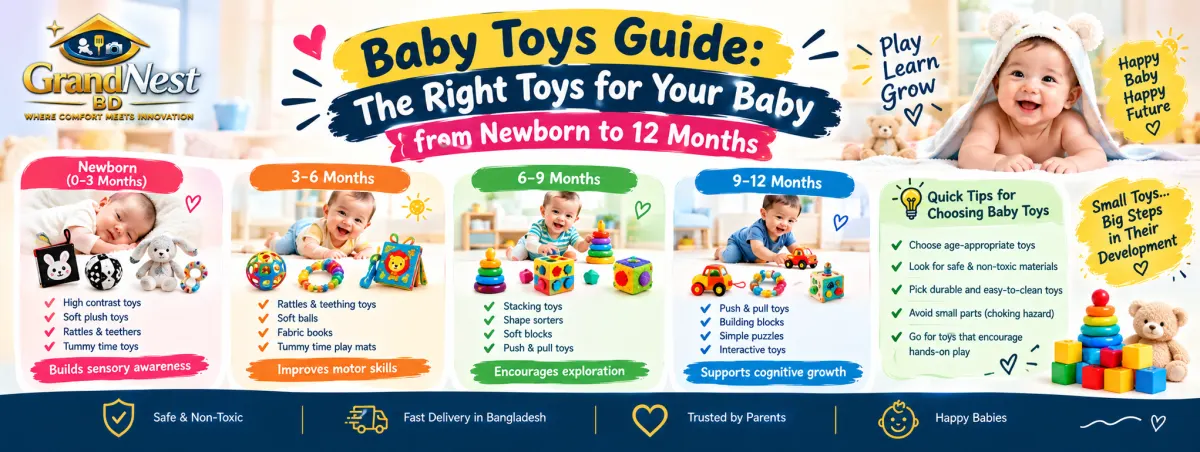
Newborn to 3 Months: Looking and Listening
Newborns see best at close range and are drawn to faces, bold patterns and high contrast, such as black and white. They also respond to soft sounds and your voice.
Good toys for this stage:
- High-contrast cards or books to hold near your baby's face.
- Soft rattles that make a gentle sound.
- A play mat with hanging toys for short periods of tummy time and back play.
- A musical mobile for the cot, placed out of reach.
At this age, you are your baby's favourite toy. Talking, singing and making faces are just as valuable as anything you can buy.
3 to 6 Months: Reaching and Grabbing
Around this time, babies start reaching for things, grabbing them and bringing everything to their mouth. They laugh more, roll over and enjoy toys that react when touched.
Good toys for this stage:
- Teethers made for babies, especially as teething begins.
- Easy-to-grip rattles and rings.
- Soft fabric books with crinkly pages and different textures.
- Activity play mats with toys to reach and kick.
A baby bouncer can also help during this stage, giving your baby a safe, comfortable seat while you work nearby. Many bouncers include gentle vibration or music. The iBaby Musical & Soothing Baby Bouncer is a 2-in-1 option. Always follow the age and weight limits on the box, use the safety straps and never leave your baby unattended in a bouncer.
6 to 9 Months: Sitting and Exploring
Many babies sit on their own during this stage and start using both hands. They love banging, dropping, shaking and passing toys from one hand to the other.
Good toys for this stage:
- Stacking cups and rings for putting things in and taking them out.
- Soft balls to roll, drop and chase.
- Board books with thick pages and bright pictures.
- Musical toys that play sounds when pressed.
- Bath toys for splashing and pouring.
9 to 12 Months: Moving and Discovering
Near their first birthday, many babies crawl, pull up to stand and take their first steps. They are curious about cause and effect: press a button, something happens.
Good toys for this stage:
- Push toys that support standing and early walking.
- Musical and dancing toys that react to a button press. For example, the Rabbit Co Guitarist Musical Dancing Toy plays music and dances.
- Shape sorters with a few large shapes.
- Large, simple vehicles to push along the floor.
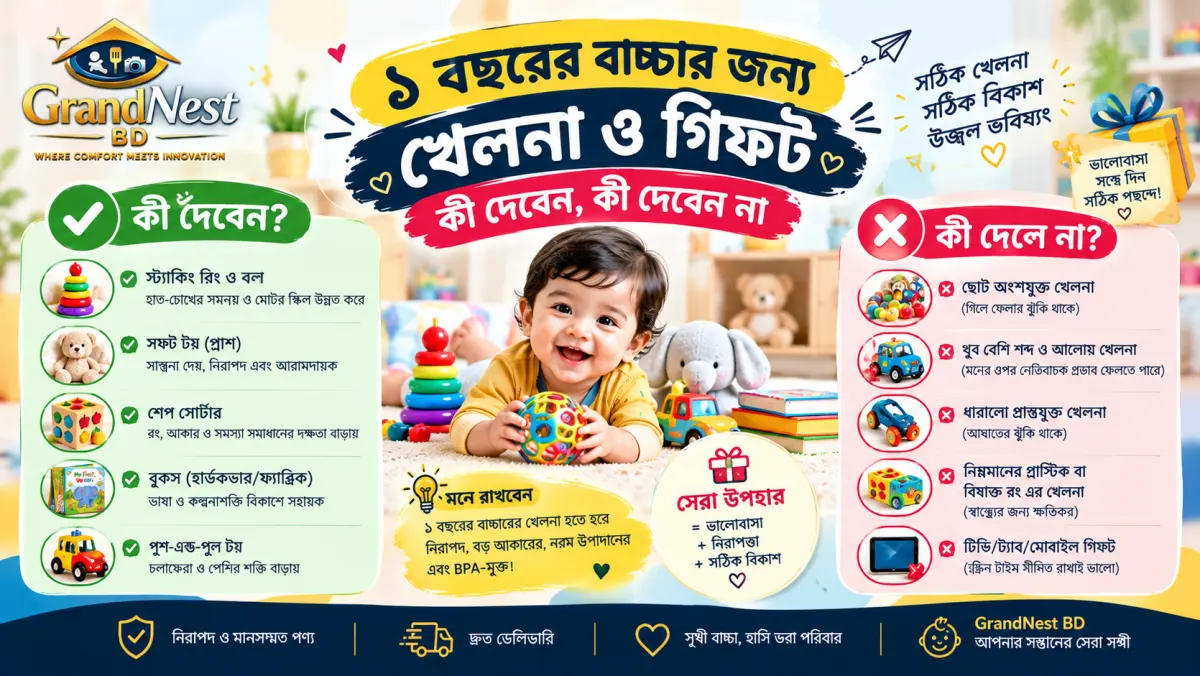
If you are shopping for a first birthday, see our guide to toys and gifts for 1 year olds.
How to Play with Your Baby
You do not need special skills. A few minutes of focused play several times a day is plenty.
- Talk constantly. Describe what you are doing and name everything you see.
- Follow your baby's lead. If they love a toy, let them explore it in their own way.
- Make tummy time fun. Lie down at your baby's level and place a toy in front of them.
- Repeat, repeat, repeat. Babies learn through repetition, and they love it.
- Keep it short. Watch for signs your baby is tired, like looking away or fussing.
How Many Baby Toys Do You Need?
Fewer than you might think. Babies can be overwhelmed by too many toys at once. A good approach is to keep five or six toys out and store the rest. Every week or two, swap a few. Old toys will feel new again.
For toys beyond the first year, see our guide to kids toys by age. And when your baby is ready for books, our guide to books for young children will help you choose.
Frequently Asked Questions
When should I start giving my baby toys?
From birth. Simple high-contrast cards, a soft rattle and your own voice and face are perfect for newborns.
Are baby walkers safe?
Many child health experts advise caution with seated baby walkers because they can let babies move quickly towards stairs, heat or hanging objects. Push toys that a baby holds while walking are often considered a safer option. Speak to your child's doctor if you are unsure.
How do I clean baby toys?
Follow the manufacturer's instructions. Most plastic toys can be washed with mild soap and water, and fabric toys can often be hand washed. Never put battery-operated toys in water.
Final Thoughts
The best baby toys are safe, simple and suited to your baby's stage. Choose a few good ones, play together often and let your baby explore at their own pace.
Browse baby and kids products in Kidz Zone. We deliver across Bangladesh with cash on delivery, and you can check your parcel before you pay. See our Return Policy for details.